
If there is one thing that the Super Bowl is known for, it is the advertising that is a part of the game. For sometimes up to five hours, the Championship Game of the National Football League commands the attention of the States of America, if not the world, and advertisers usually will place their most expensive advertising campaigns on The Big Game. Two advertisers will not be a part of the action this year; they were shut down by the NFL before the game even starts because they are “prediction markets.”
Predict This!
The NFL has prohibited two companies from advertising during the Super Bowl LX festivities on Sunday. Those two companies, Kalshi and Polymarket, are prevented from advertising during NFL events. Why? The NFL has several rules governing which television advertisements may run alongside its programming, and the offerings of Kalshi and Polymarket violate those rules.
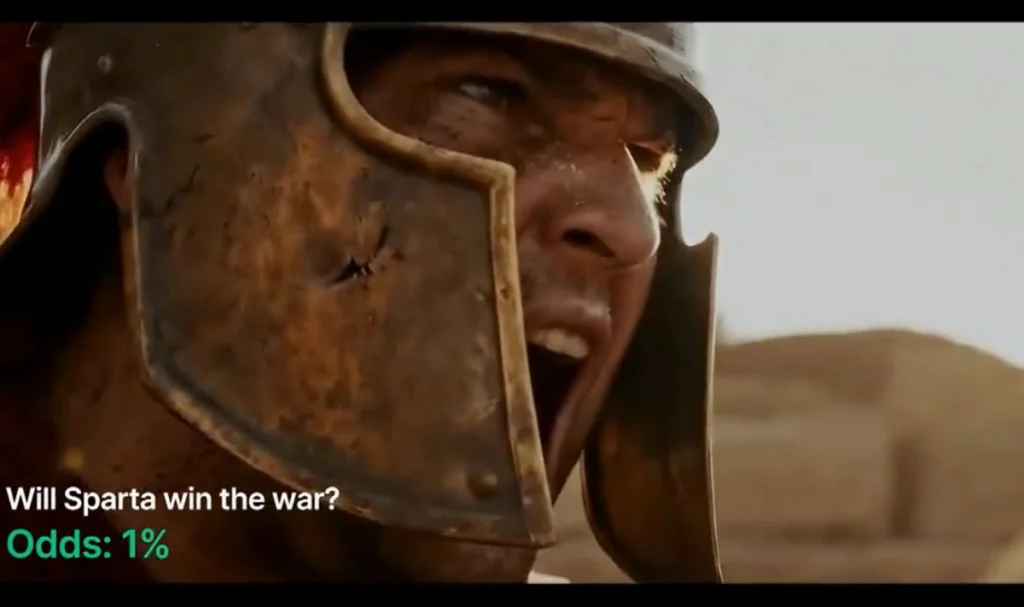
Kalshi, if you’ve missed the numerous television advertisements, is termed a “prediction market,” and Polymarket is trying to encroach on Kalshi’s territory. A prediction market is a form of “investing” in that people can place money on potential outcomes for certain circumstances in daily life. Want to choose who will be the winner of the Academy Award for Best Picture? What about whether Prince Harry and Meghan Markle will return to the Royal Family? These prediction markets allow people to evaluate their predictive skills with real money backing them.
If this sounds familiar to you, it is because it is a form of gambling. These have long been a part of the sports betting world, often referred to as “prop betting.” In sports betting, the wagerers get a set line, such as the Seattle Seahawks beating the New England Patriots by more than four points, and they can “predict” whether the ‘Hawks will do just that – or not. It also covers predicting athletic performance, such as whether either Seahawks quarterback Sam Darnold or Patriots quarterback Drake Maye will throw an interception.
These prediction markets operate on the same model as sportsbooks. They set a line – complete with the appropriate gaming terms, such as “-110” (receive $90 back on a $100 bet) or “+200” (receive $200 back for a $100 bet) – and the “investors” put their money down on whichever side they believe will occur. The problem with these prediction markets is that they can sometimes skew their own options.
According to The Mirror US, Kalshi offers a “contract” (not a betting line) that certain companies will or will not advertise during this year’s Big Game. Because high-ranking executives and personnel within these companies can determine whether they are advertising, they have an opportunity to earn significant compensation for their knowledge. That is known as “insider trading” in securities, which Kalshi and Polymarket say they are comparable to.
Convoluted History for Prediction Markets
There is a long and convoluted history with these “prediction markets.” Introduced in 2021, Kalshi has typically been associated with offering “contracts” on world events, elections, economic indicators, and other sensitive areas. These are considered sensitive areas because they contain a great deal of knowledge held by a select few individuals, who can monetize that information.
The Commodities Futures Trading Commission, which regulates the U.S. derivatives market, has long had disputes with Kalshi over its offerings. In many cases, the CFTC viewed Kalshi’s offerings as thinly veiled gambling or prop betting activities. The CFTC initially sought to prevent contracts related to the 2024 U.S. Congressional races (and who would control Congress), but the courts overruled the CFTC. This type of market action, along with betting on certain actions in Gaza (such as whether they would be bombed, for example), has painted the company in a bad light.
After the 2024 Presidential election brought in a different regime, the shackles have been lifted on companies like Kalshi and their offerings. They have begun to move even closer to acting like a sports book while trying to maintain that they are a legitimate “market-based” company for investment. It has also opened the door to several knockoff sites offering the same “prediction market” platform, such as Polymarket and iPredict.
Because the current version of the federal government has stepped away from regulating “prediction markets,” the individual states have actually stepped up, trying to prevent what are essentially sportsbooks from operating within their jurisdictions. Massachusetts won a lawsuit in January that ordered Kalshi to block Massachusetts residents from accessing its site. New York has stated that Kalshi is “unlicensed sports betting” and has a class action lawsuit pending to prevent access for New York residents.
Thus, while you might see advertisements for DraftKings on Sunday’s Super Bowl broadcasts (DraftKings IS the “official daily fantasy partner” of the NFL), you will not be seeing anything regarding the companies that are trying to make an end run around gaming regulations in these “prediction markets.”


