
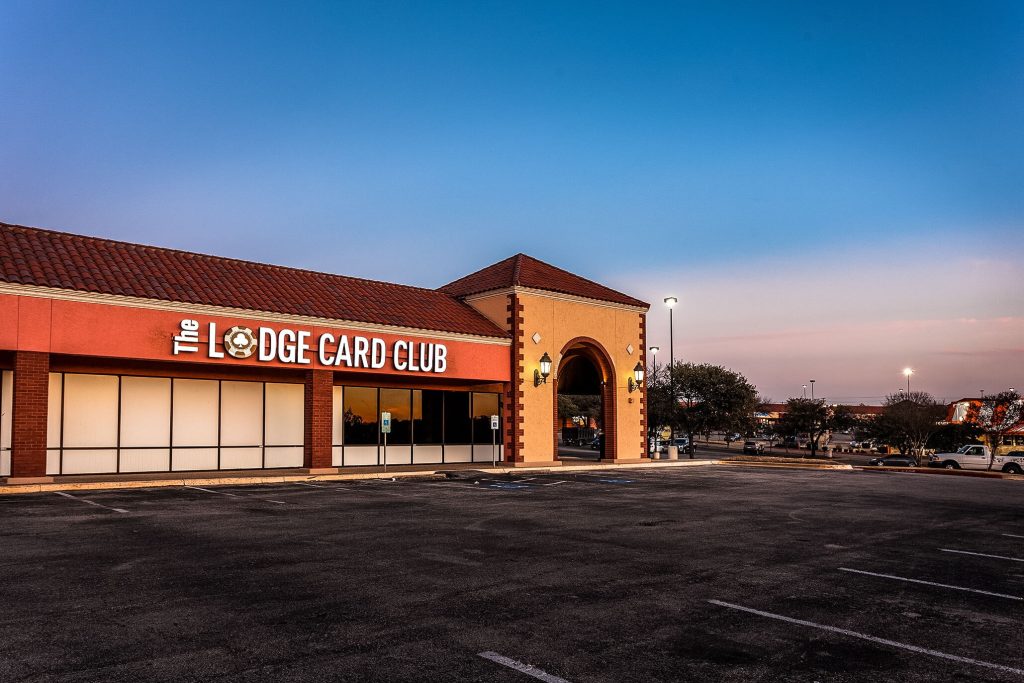
The poker community is once again facing the legal system’s onslaught, this time in Texas. Last week, law enforcement raided The Lodge Card Club in Austin, TX, and the doors have been locked up since. There is a fact with this that cannot be overlooked, however: the crackdown on the Texas “poker club” system was long overdue, an inevitability brought to a head because of the success of the outlets.
Why Was the Lodge Shut Down?
On Tuesday, the “long arm of the law” came down on The Lodge, but it was not the players they were after. Anyone in the card club at the time, players and employees alike, was allowed to leave. Players who were engaged in cash games were allowed to take their chips with them, with assurances from law enforcement and The Lodge that they would be honored at a later date. For tournament players in the room at the time, they had to walk away from the game; The Lodge later stated that these players would be given a free tournament entry for their troubles.
Law enforcement was apparently looking into some aspects of The Lodge’s licensing. Texas officials from the Alcoholic Beverage Commission were on hand, apparently reviewing the books to determine whether the licenses were up to date. With law enforcement there, Five-O decided it was a suitable time to review the group’s financials, in case there was money laundering.
It was a devastating act for The Lodge Card Club. It was supposed to host a stop on the World Poker Tour this weekend, but the “Wacky Weekend of Poker” celebration was postponed due to the closure. The WPT has stated that “updated dates and additional details will be announced once finalized.”
Since Tuesday, The Lodge Card Club has been closed, although no charges have been filed against the organization. According to a club statement on Sunday, there are no indications of what law enforcement is doing regarding the situation. Additionally, The Lodge admits that there are over 200 staff members at The Lodge, alongside the players involved, who are in a state of limbo with the doors locked.
Was It Avoidable?
There are plenty of questions about the situation at The Lodge, but one thing is verifiable: it was inevitably going to happen.
The history of the Texas “membership” poker club scene goes back well over a decade. In the beginning, these clubs opened in a haze of gray. Texas laws designate that gambling is illegal, no ifs, ands, or buts about it. But astute attorneys found a loophole in the gaming laws that, if the clubs were operated as a “membership” club – that people had to pay a “membership fee” to be able to enter the club – then it was permissible to play poker on the premises, so long as all the money wagered found its way back to the players.
Many clubs were opened in Texas under this reading of the law. The businesses would make money from alcohol and food sales, as well as “membership fees” that players paid upon entering the building. The problem with this system is that some cities were more than willing to accept it, while others would drop the hammer on the activity.
In Texas, there are approximately 200 poker clubs, according to Poker Atlas. Many, however, have started and, after facing challenges from local District Attorneys and law enforcement, closed. The constant in the situation has been that, from all appearances, these businesses have never sought to have their business codified into law, depending on the whims of an elected official – the DAs for each county – to allow their games to continue.
The Texas legislature has not exactly done much for this cause, either. While entertaining the idea of bringing casino gaming to the state, only one bill, House Bill 2154, was introduced by State Representative Matthew Shaheen during the Texas Legislature’s last session in 2025. That bill would have defined what qualified as a “private place” under the gaming laws, effectively granting poker clubs legal status in the state. It would die in the 2025 session, not even making it out of the House Licensing and Administrative Procedures committee.
The inaction of the Texas Legislature has been matched only by that of the card room owners. Instead of aggressively pursuing legitimacy for their businesses, they were more worried about staying under the radar, running their card games, and avoiding attention. When your business exists at the whim of a District Attorney, and whether they win their next election and their political direction, you might want to be more proactive in regulating your business.
While it may have worked for the last fifteen years or so, it is time for Texas to decide on the legality of the Texas card room industry. Is it allowable under Texas laws? Or are these rooms violating one of the longest-running laws on the legality of gambling in existence? And WILL the poker rooms actually try to “legalize it” and make their business legitimate in the eyes of the state? The only thing known at this time is that The Lodge Card Club in Austin is closed, and that its closure was an inevitability.


